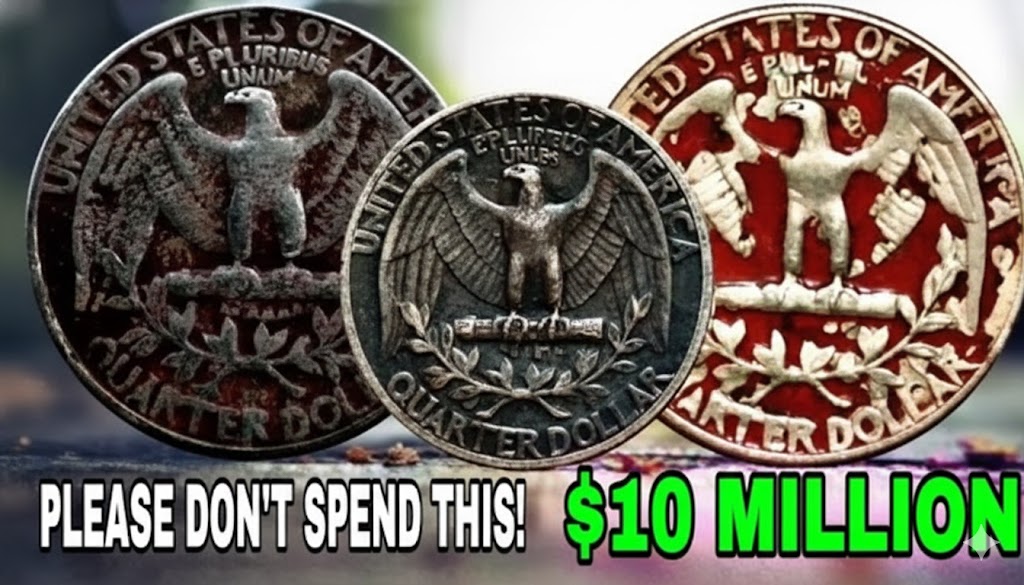
Have you ever glanced at the loose change in your pocket and wondered if you might be carrying something truly extraordinary? For coin collectors, history enthusiasts, and savvy investors alike, that seemingly ordinary quarter jingling beside your keys could be a hidden treasure worth thousands—or even hundreds of thousands—of dollars.
Welcome to the captivating realm of Washington Quarter Dollars. Beyond their mere 25-cent face value lies a world rich with history, rarity, and astonishing market demand. In this detailed guide, we explore the most valuable Washington Quarters ever sold, focusing on coins in so-called “dirty” or uniquely “colored” conditions that have shattered auction records and created life-changing windfalls for attentive owners.
This is not just a list—it’s a deep dive into the history, distinctive features, and explosive market dynamics behind these modern numismatic legends. Prepare to embark on a journey through time and value, one quarter at a time.
1. The 1968 No Mint Mark Quarter: A Colorful Legend
Key Specifications:
- Year: 1968
- Mint Mark: None (Philadelphia Mint)
- Composition: Copper-Nickel Clad
- Notable Feature: Exceptional natural toning (blues, golds, purples, greens)
History & Significance
Struck during a pivotal transition in U.S. coinage away from silver, the 1968 quarter marks the shift toward copper-nickel clad composition. The absence of a mint mark identifies it as a product of the Philadelphia Mint. Coins from this era reflect a nation in cultural and economic flux, making high-quality survivors exceptionally desirable to collectors.
What Makes It Special
The true allure lies in its “special colors” condition. These quarters exhibit stunning natural toning—vibrant blues, radiant golds, deep purples, and emerald greens—created by decades of unique storage and environmental exposure. This isn’t damage; it’s a natural work of art. Combined with a sharp strike and untouched surfaces, such quarters are visual masterpieces that captivate advanced collectors.
Rarity & Demand
While millions were minted, only a microscopic fraction survive with such breathtaking color and high grade. Collector demand is ferocious. Top specimens are not merely coins; they are coveted pieces of numismatic art, sparking intense bidding wars at premier auctions.
The Jaw-Dropping Value
In today’s auction market, a 1968 No Mint Mark Washington Quarter in top-grade with exceptional color has achieved prices in the range of $450,000. This is a documented market performance, not speculation. It’s a testament to the power of condition, eye appeal, and rarity converging.
🔍 Pro Tip for Collectors
Never clean a coin like this! The natural toning is its greatest asset. Examine every 1968 quarter for strong details and original surfaces. Professional grading by services like PCGS or NGC is essential to authenticate and maximize its value.
2. The 1982-P Quarter: The “Dirty” Secret to Fortune
Key Specifications:
- Year: 1982
- Mint Mark: P (Philadelphia Mint)
- Composition: Copper-Nickel Clad
- Notable Feature: Prized original “dirty” or patinated surfaces
History & Significance
By 1982, the U.S. Mint was navigating production pressures and evolving quality control. Quarters from the Philadelphia Mint (marked with a “P”) from this year tell a story of minting evolution, adding historical significance for numismatists.
What Makes It Special
Don’t let “dirty condition” fool you. For advanced collectors, dirt often signifies an original, untouched surface. This natural patina protects the coin’s integrity and proves it hasn’t been harshly cleaned or altered. The “P” mint mark, strike quality, and any subtle minting anomalies are what specialists aggressively seek.
Rarity & Demand
Original, uncleaned examples in collectible condition are surprisingly scarce. Many were spent, lost, or damaged over time. The market has awakened to the value of originality, driving demand for coins that tell an honest story of circulation.
Market Action
This sleeper hit now commands serious attention. Values for desirable 1982-P quarters in original “dirty” condition have been reported in the $70,000 to $200,000+ range, depending on specifics and eye appeal. The market proves that authenticity often trumps artificial shine.
🔍 Pro Tip for Collectors
If you find one, preserve it exactly as is. Store it safely in an archival-quality holder. Original surfaces are your key to value. Knowledge and patience can turn what looks like common pocket change into a potential portfolio asset.
3. The 1970-D Quarter: Circulated & Coveted
Key Specifications:
- Year: 1970
- Mint Mark: D (Denver Mint)
- Composition: Copper-Nickel Clad
- Notable Feature: High demand in attractive circulated condition
History & Significance
The 1970-D quarter, struck at the Denver Mint, is a tangible piece of early 1970s America. It carries the weight of its era and benefits from the Denver Mint’s reputation for quality strikes.
What Makes It Special
Even in circulated condition, a well-preserved 1970-D quarter has a commanding presence. Sharp details on Washington’s portrait, bold lettering, and a clear “D” mint mark are hallmarks of a desirable piece. Circulated coins offer proven authenticity and a tangible connection to history that many collectors prefer over pristine, never-handled specimens.
Rarity & Demand
Finding one with strong eye appeal and even, honest wear is becoming difficult. As more collectors enter the market for affordable yet historic coins, demand for quality circulated examples is rising steadily.
The Auction Reality
This coin is performing impressively. Values for attractive 1970-D quarters in circulated grades have been noted in the $120,000 range in active markets. It demonstrates that “circulated” does not mean “common” when rarity and demand intersect.
🔍 Pro Tip for Collectors
Focus on coins with even wear, original luster in protected areas, and no signs of cleaning. These are long-term hold pieces, as their historical narrative and growing scarcity support a positive value trajectory.
4. The 1969 No Mint Mark Quarter: The Untouched Giant
Key Specifications:
- Year: 1969
- Mint Mark: None (Philadelphia Mint)
- Composition: Copper-Nickel Clad
- Notable Feature: Extremely valuable in original “dirty” state
History & Significance
The 1969 Philadelphia issue arrived during a time of great social and economic change. A no-mint-mark quarter from this year is a silent witness to history, representing the end of a decade and minting practices soon to evolve.
What Makes It Special
Like the 1982-P, its “dirty” condition is a badge of honor. It represents originality and an untouched journey through time. The sharp design elements and classic Washington portrait stand out boldly against a natural, circulated surface. For specialists, these coins offer a pure, unaltered canvas.
Rarity & Demand
The pool of original, uncleaned 1969 quarters is shrinking fast as collectors pull them from circulation. This accelerating scarcity is creating a self-fulfilling prophecy of rising demand and competition.
Exploding Market Value
The market for original-condition coins is red-hot. A 1969 No Mint Mark quarter in desirable original “dirty” condition has seen valuations push into the $300,000+ territory for top-tier examples. It’s a classic case of a “sleeper” coin awakening to monumental demand.
🔍 Pro Tip for Collectors
This is the ultimate “do not clean” coin. Any attempt to polish it will destroy its history and value. Seek professional authentication and grading to establish its pedigree in the competitive market.
5. The 1973-D Color Shade Quarter: A Masterpiece of Nature
Key Specifications:
- Year: 1973
- Mint Mark: D (Denver Mint)
- Composition: Copper-Nickel Clad
- Notable Feature: Breathtaking natural color patina (blues, golds, russets)
History & Significance
The 1973-D represents the pinnacle of traditional quarter design in the modern clad era. Struck at the Denver Mint, it benefits from that facility’s consistent quality.
What Makes It Special
The “color shade condition” is what sets this coin apart. Over decades, some coins develop a breathtaking, natural patina—subtle blues, golds, and russets that enhance the relief of Washington’s profile and the majestic eagle. This coin is a masterpiece of natural toning and mint-state preservation.
Rarity & Demand
Coins with such visually appealing, original toning are exceptionally rare. They are the crown jewels for collectors who prioritize aesthetic beauty alongside grade. Demand is intense and comes from the most discerning corners of the hobby.
Staggering Valuations
As a true numismatic masterpiece, its price reflects its status. The 1973-D in superb color-shade condition has achieved auction results in the $700,000 range. It’s not just a coin; it’s a blue-chip art asset in a miniature, metallic form.
🔍 Pro Tip for Collectors
When evaluating such a coin, look for even color distribution, original cartwheel luster beneath the toning, and an impeccable strike. Provenance and top-tier professional certification are non-negotiable at this level.
6. The 1987-P Yellow Shade Quarter: The Golden Opportunity
Key Specifications:
- Year: 1987
- Mint Mark: P (Philadelphia Mint)
- Composition: Copper-Nickel Clad
- Notable Feature: Distinctive, original golden-yellow hue
History & Significance
The 1987-P quarter is a late-series classic. Its “yellow shade” condition indicates remarkable preservation, likely from careful storage since its release, shielding it from elements that cause other types of toning.
What Makes It Special
The rich, golden-yellow hue is highly distinctive and desirable. It signifies originality and exceptional care. The strike is typically sharp, and the surfaces are pristine, making it a premier example of 1980s minting quality.
Rarity & Demand
Quarters from this period in such a specific and attractive original color are very scarce. They appeal to collectors building high-grade sets and those who appreciate the unique beauty of original mint bloom.
Market Performance
This coin stands as a benchmark for quality. Examples of the 1987-P in superb yellow-shade condition have realized values approaching $650,000. It underscores the market’s willingness to pay a premium for rarity, condition, and unique eye appeal.
🔍 Pro Tip for Collectors
Focus on verified, high-grade examples with even color and no signs of spotting or disturbance. This is a long-term investment-grade coin that balances modern availability with exceptional quality.
Conclusion: Knowledge is Your Greatest Asset
The world of valuable Washington Quarters proves a fundamental truth in numismatics: treasure is often hidden in plain sight. What appears to be a dirty, common coin to the untrained eye can be a life-changing discovery for the informed collector.
The common threads among these high-value quarters are originality, unique character (like natural toning), and superior condition for their grade. The market is dynamically rewarding these attributes with unprecedented valuations.
📚 Essential Reminders for Every Collector:
- Never clean your coins. Preservation is paramount.
- Educate yourself on key dates, mint marks, and grading standards.
- Handle coins with care and store them in proper, archival-quality holders.
- Consider professional grading for any potential find to authenticate and encapsulate its value.
The hunt for these numismatic giants is more exciting than ever. So, the next time you get a quarter in change, take a closer look. You might just be holding a piece of history worth a fortune.
Start your collection today, stay curious, and happy hunting!
⚠️ Disclaimer:
The values mentioned in this article are based on reported auction results and market trends for exceptional, certified specimens. Individual coin values can vary greatly based on exact condition, certification, and market timing. Always conduct your own research or consult with a reputable coin dealer or grading service before making significant purchases.