Key Finding: Certain rare 2009 Lincoln pennies with minting errors have sold for astonishing prices at auction, with some exceptional examples reaching five-figure or even six-figure values.
Introduction: The Hidden Treasure in Your Pocket Change
Most people handle pennies daily without ever giving them a second thought. They’re often considered the least valuable denomination, frequently discarded or overlooked. However, certain 2009 Lincoln Bicentennial pennies are far from ordinary. Select rare versions with specific minting errors have sold for astonishing prices at major auctions, transforming everyday pocket change into highly valuable collectibles.
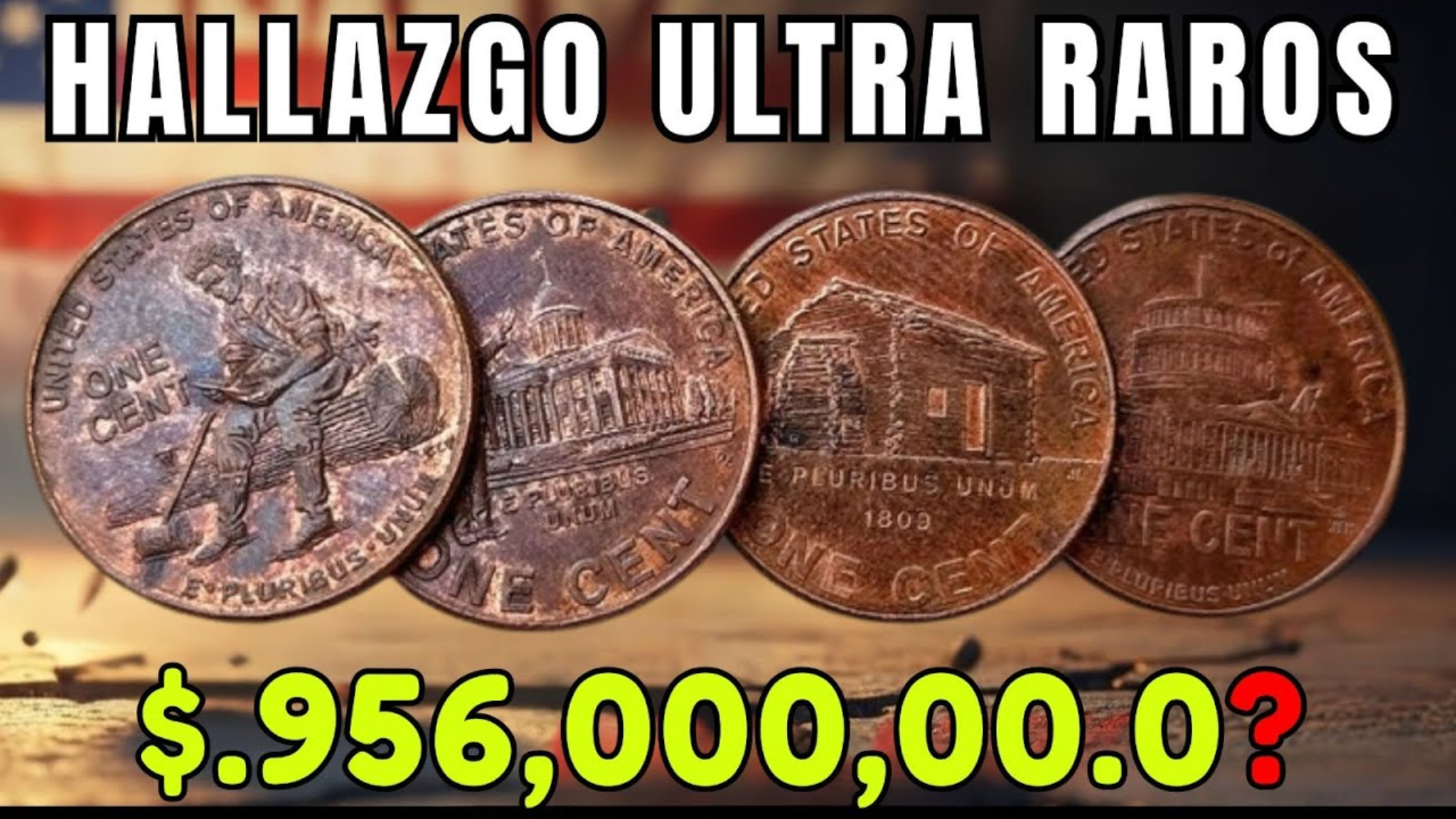
Issued to commemorate the 200th anniversary of Abraham Lincoln’s birth, these special pennies feature four unique reverse designs representing different stages of Lincoln’s life. Among them, the coin depicting Lincoln’s formative years in Indiana—showing him seated on a log reading a book—has become one of the most recognizable modern U.S. coins. More importantly, it has emerged as potentially one of the most valuable coins still circulating today.
Why the 2009 Lincoln Penny Is Special for Collectors
In 2009, the U.S. Mint embarked on an unprecedented numismatic program, releasing four different penny designs throughout the year to honor Abraham Lincoln’s life and legacy. This marked the first time in history that the Lincoln cent’s reverse design changed multiple times within a single year. The four designs represented:
- Birth and Early Childhood in Kentucky (log cabin design)
- Formative Years in Indiana (Lincoln reading while seated on a log)
- Professional Life in Illinois (Lincoln as a young lawyer in Springfield)
- Presidency in Washington, D.C. (U.S. Capitol building)
Although millions of these 2009 Lincoln Bicentennial pennies entered circulation, only a minuscule fraction contain genuine mint errors. It’s these errors—anomalies in the production process—that drive their exceptional value among serious collectors and numismatists.
A standard 2009 Lincoln penny without errors remains extremely common and typically retains only face value. Even pristine, uncirculated examples from mint sets usually sell for just a few dollars. However, when an authentic mint error is present, particularly one that’s dramatic and well-preserved, the value can increase exponentially.
Rare Mint Errors Collectors Seek (And Pay Premiums For)
Mint errors occur when something goes awry during the coin production process at the U.S. Mint facilities in Philadelphia or Denver. For the 2009 Lincoln Bicentennial penny, collectors and error specialists focus on several specific types of errors:
1. Doubled Die Errors
One of the most valuable and sought-after errors is the doubled die. This occurs when the coin’s design is impressed twice, slightly offset, creating a visible doubling effect. True doubled dies show sharp, well-defined doubling on design elements such as:
- The date “2009”
- The word “LIBERTY”
- The motto “IN GOD WE TRUST”
- Lincoln’s facial features on the obverse
2. Off-Center Strikes
These fascinating errors occur when the coin blank (planchet) is not properly aligned within the striking press. The resulting coin shows part of the design missing, with a visible blank area. Value depends on the degree of misalignment:
- 5-15% off-center: Modest premium ($20-$100)
- 20-40% off-center: Significant value ($100-$500)
- 50%+ off-center with visible date: Can sell for hundreds or even thousands
3. Wrong Planchet Errors
In rare cases, a Lincoln cent planchet might accidentally be fed into a press intended for another denomination, or vice versa. These errors often exhibit different weights, diameters, or metallic composition and can command extremely high prices at auction.
4. Broad Strikes
A broad strike occurs when the coin is struck without the retaining collar that forms the edge. These coins appear wider and flatter than normal specimens and are particularly popular among error collectors.
5. Die Cracks and Die Breaks
As coinage dies deteriorate from extensive use, they can develop cracks or breaks. When these imperfections transfer to the struck coins, they create raised lines or shapes. While minor cracks add minimal value, dramatic die breaks that create distinctive patterns can significantly increase a coin’s worth.
How Much Are These Pennies Actually Worth?
The value spectrum for 2009 Lincoln pennies is remarkably broad, ranging from face value to exceptional five-figure prices for the rarest error coins. Below is a comprehensive valuation guide based on recent auction results and dealer pricing:
| Coin Type / Error | Condition | Estimated Value Range |
|---|---|---|
| Standard 2009 Lincoln Penny (no errors) | Circulated | Face value (1 cent) |
| Standard 2009 Lincoln Penny (no errors) | Uncirculated (Mint State) | $1 – $5 |
| Minor Mint Error (small die crack, slight misalignment) | Circulated | $20 – $100 |
| Moderate Error (noticeable off-center, moderate doubling) | Uncirculated to lightly circulated | $100 – $500 |
| Major Error (strong doubled die, dramatic off-center 40%+) | Uncirculated to lightly circulated | $500 – $5,000 |
| Exceptional Error (multiple errors, wrong planchet) | Certified Mint State (MS-63 or higher) | $5,000 – $25,000+ |
| Rarest Certified Examples (record-setting auctions) | Professional grading (PCGS/NGC) with exceptional eye appeal | $50,000 – $95,600+ |
The most extreme cases, particularly coins with multiple dramatic errors that have been professionally certified by services like PCGS (Professional Coin Grading Service) or NGC (Numismatic Guaranty Corporation), have reached remarkable five-figure and even six-figure prices at major numismatic auctions.
Condition and Certification: Critical Factors in Determining Value
For error coins, condition plays an even more crucial role than for standard numismatic items. Two coins with identical errors can be worth vastly different amounts based on several key factors:
Surface Preservation
Coins that have escaped circulation with minimal wear, scratches, or contact marks command substantial premiums. Original mint luster (the “cartwheel” effect when rotated under light) is particularly desirable.
Error Prominence
The error must be clearly visible without magnification to command top dollar. Subtle errors that require magnification to identify typically have more modest value.
Professional Certification
High-value examples are almost always authenticated and graded by professional services like PCGS or NGC. These third-party certifications:
- Verify the error’s authenticity
- Assess the coin’s condition on a 1-70 scale (Sheldon scale)
- Encapsulate the coin in a tamper-evident holder
- Provide a unique certification number for verification
This professional authentication adds significant buyer confidence and can substantially increase auction prices, often justifying premiums of 20-50% over raw (uncertified) coins.
Final Thoughts: The Modern Treasure Hunt
The 2009 Lincoln Bicentennial penny proves that even modern coins can transform into extraordinary numismatic treasures. Unlike classic rarities that exist primarily in museum collections or wealthy investors’ vaults, many of these coins are still out there in circulation—hiding in coin jars, drawers, forgotten collections, or even your daily change.
While finding a penny worth thousands remains a long-shot possibility, the existence of these valuable errors adds an exciting dimension to coin collecting. It serves as a reminder to examine your change carefully, particularly 2009 pennies with unusual characteristics. You might just hold a modern numismatic treasure worth hundreds or even thousands of times its face value.
If you suspect you have a valuable error coin, consult with a reputable coin dealer or submit it to a professional grading service for authentication. The small investment in certification could potentially unlock significant value in what might otherwise be overlooked as mere pocket change.