Still in Circulation Across Cities Like New York, Los Angeles, and Chicago
The legendary Lincoln Wheat Penny – could it be hiding in your pocket?
Countless coins change hands daily across America. Most people barely notice the pennies in their wallets or jars. Yet, among those ordinary coins may lie a hidden treasure—the Lincoln Wheat Penny, rumored to be worth an astonishing $44 million.
The History of the Lincoln Wheat Penny
Introduced in 1909 to commemorate Abraham Lincoln’s 100th birthday, the Lincoln Wheat Penny was designed by Victor David Brenner. It was the first U.S. coin to feature a real person, breaking from the nation’s long tradition of using symbolic figures.
Design Significance
The coin’s design includes Lincoln’s profile on the obverse and two wheat stalks on the reverse—symbolizing prosperity and growth. The Wheat Penny remained in production until 1958, when the design changed to the Lincoln Memorial reverse.
During its near 50-year run, billions of Wheat Pennies were minted across the Philadelphia, Denver, and San Francisco Mints. Yet, a few rare specimens, because of errors or special circumstances, became some of the most sought-after coins in U.S. history.
Why a Penny Could Be Worth $44 Million
To reach a staggering value of $44 million, a Lincoln Wheat Penny would need to possess a perfect storm of characteristics:
- Unmatched rarity: It could be the only known example of its kind.
- Unique composition: Possibly struck in a rare metal like bronze or even silver due to a minting error.
- Impeccable condition: A flawless, uncirculated coin preserved against all odds.
- Historical intrigue: A mysterious backstory or long-lost provenance adding allure.
- Verifiable provenance: Documentation tracing its history back to the mint.
- Market timing: Appearing when wealthy collectors are competing for the ultimate prize.
Though there’s no official record of a Lincoln Wheat Penny selling for $44 million, the legend persists because similar coins have fetched astronomical prices, sparking hope that one ultra-rare example still hides in circulation.
Notable Rare Lincoln Wheat Pennies
While none have officially sold for $44 million, several Wheat Pennies have made headlines for their rarity and value:
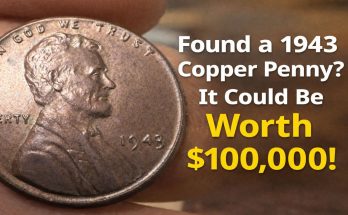
1943 Copper Wheat Penny
During World War II, most pennies were struck in steel to conserve copper for ammunition. A few copper ones were mistakenly minted—making them exceptionally rare. Some have sold for over $1 million.
1955 Double Die Penny
A striking error caused the date and lettering to appear doubled, creating one of the most famous errors in U.S. coinage. In mint condition, these can fetch over $100,000.
1909-S VDB Penny
The first edition, bearing the designer’s initials and minted in San Francisco, is highly prized by collectors. Only 484,000 were minted, making it extremely valuable today.
Each of these coins represents the perfect blend of history, error, and scarcity that defines numismatic legends.
Could a $44 Million Penny Still Be Circulating?
It sounds impossible, but history proves that rare coins can slip through unnoticed. A few years ago, a man in Denver reportedly found a rare 1943 copper penny in his change, later valued at nearly $200,000.
With millions of Wheat Pennies still in existence, it’s conceivable that another rare specimen remains hidden in plain sight—in a coin jar in Dallas, or a forgotten drawer in Seattle.
Collectors and enthusiasts continue to check their change, hoping to discover the next great coin legend. After all, every priceless find begins as an ordinary object until someone takes a closer look.
How to Spot a Valuable Lincoln Wheat Penny
Check These Key Features:
- Inspect the year: Dates like 1909, 1914-D, 1922 (no D), 1931-S, and 1955 are highly valuable.
- Check the mint mark: Coins with “S” (San Francisco) or “D” (Denver) can indicate rarer mintages.
- Look for unusual features: Doubling, off-center strikes, or unique coloration can suggest minting errors.
Important Guidelines:
- Never clean your coin: Cleaning can ruin its surface and reduce its value dramatically.
- Get professional grading: Certified grading services can authenticate and value your penny.
- Handle with care: Use cotton gloves and hold coins by the edges to preserve condition.
- Research comparable sales: Check auction records for similar coins to estimate potential value.
Frequently Asked Questions
The story of a Lincoln Wheat Penny valued at $44 million is largely considered a legend. While no verified sale has reached that figure, certain rare Wheat Pennies—like the 1943 copper and the 1955 double die—have sold for hundreds of thousands or even millions of dollars.
The most valuable Lincoln Wheat Pennies include the 1909-S VDB, 1943 copper penny, 1955 double die penny, and the 1922 no-D penny. Their worth depends on rarity, condition, and minting errors.
It’s rare, but possible. Millions of Wheat Pennies are still out there, and rare varieties occasionally appear in coin rolls, old jars, or estate collections. Your best chances are searching through old coin collections or rolls from banks.
You can sell valuable Lincoln Wheat Pennies through coin dealers, numismatic auctions, or certified grading services such as PCGS or NGC. Online platforms like Heritage Auctions or eBay are also popular among collectors.
The Enduring Mystery of the $44 Million Penny
Whether or not the $44 million Lincoln Wheat Penny truly exists, its legend has already inspired millions to look more closely at their pocket change.
In an age where digital transactions dominate, this fascination with tangible history endures—a small copper coin connecting Americans from Boston to Phoenix through shared curiosity and hope.
Even if the elusive penny remains undiscovered, its story reminds us that sometimes the greatest treasures are hiding in the most ordinary places. So, the next time you find a Wheat Penny, take a moment before spending it—because you just might be holding history worth millions.