An in-depth exploration of America’s iconic commemorative coin and the rare errors that transform common pocket change into valuable collectibles
The 1776–1976 Bicentennial Quarter stands as one of the most iconic and widely recognized coins in American numismatic history. Created to commemorate the 200th anniversary of the United States’ independence, this coin holds a special place not only among collectors but also in the hearts of the general public. While millions of these quarters were minted for everyday circulation, a small number were struck with fascinating minting errors—turning ordinary pocket change into highly sought-after collectibles. Understanding the history, characteristics, and market value of these error coins can help collectors distinguish between common pieces and rare treasures worth significant sums.
Historical Background of the Bicentennial Quarter
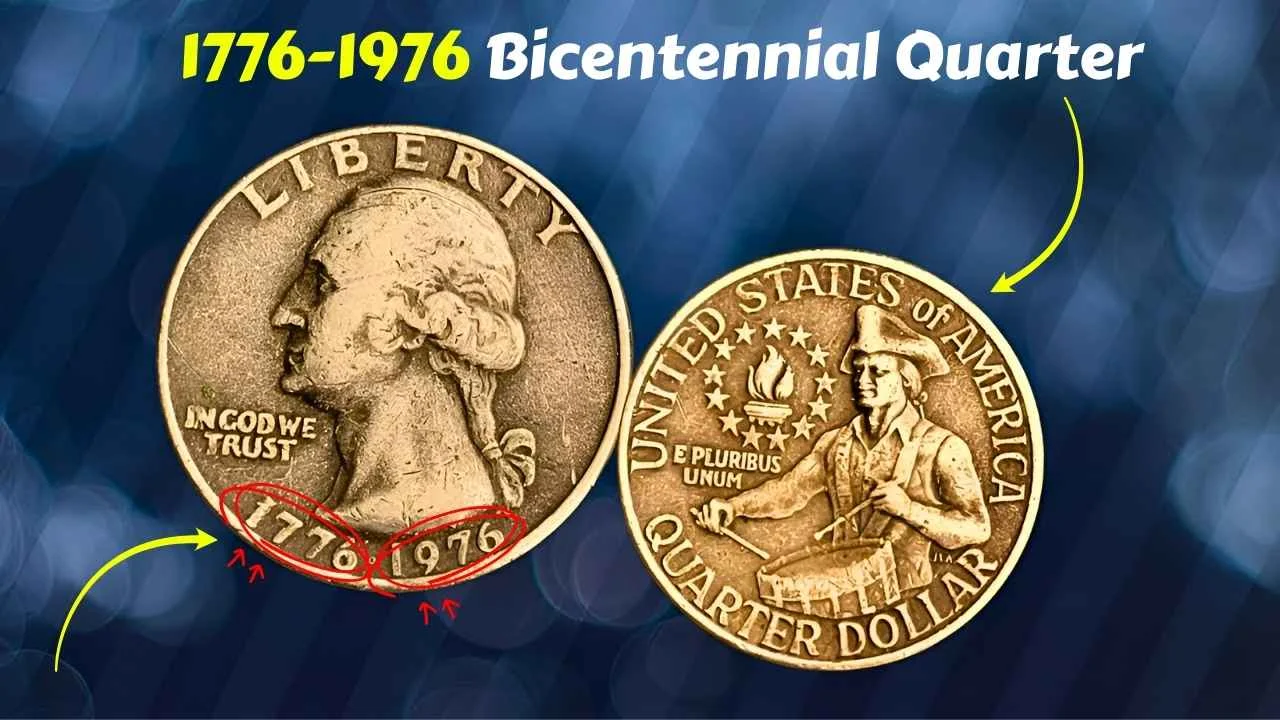
To honor the bicentennial of American independence, the United States Mint released special designs for the quarter, half dollar, and dollar coins in 1975 and 1976. The Bicentennial Quarter features the dual date “1776–1976” on its obverse (heads side), which continues to bear the portrait of George Washington. The reverse (tails side) showcases a distinctive design by Jack L. Ahr: a colonial drummer boy beside a torch of victory, encircled by thirteen stars representing the original colonies.
Due to the national significance of the celebration, the Mint produced these coins in enormous quantities. Most were struck in copper-nickel clad for circulation, while special collector versions were minted in 40% silver. Despite the high production volumes, the minting process was not flawless—giving rise to the rare and valuable error coins that captivate collectors today.
Quick Historical Fact
The Bicentennial coins were the first U.S. circulating commemorative coins in over 50 years, marking a significant departure from regular coinage designs.
Why Most Bicentennial Quarters Are Common
In typical circulated condition, a standard 1776–1976 Bicentennial Quarter is generally worth only its face value of 25 cents. Hundreds of millions were minted, and many remain in circulation or in ordinary collections. Their value increases only when a coin exhibits a rare mint error, exceptional preservation (high grade), or a special composition (such as silver). Therefore, collectors must carefully examine each quarter rather than assume all are valuable.
What Makes an Error Coin Special?
Minting errors occur when something goes awry during the coin production process. Coins are manufactured at high speeds using heavy machinery, and even minor mechanical or human errors can result in noticeable flaws. When these errors are dramatic, well-defined, and rare, they attract significant collector interest. The value of an error coin depends on:
The type and visibility of the mistake
Its rarity and demand among collectors
The coin’s overall preservation and grade
Common Types of Bicentennial Quarter Errors
Several types of errors can appear on Bicentennial Quarters, each with its own appeal and value range:
1. Off-Center Strikes
The coin’s design is misaligned, leaving a portion of the blank planchet (metal disk) visible. Value increases with the degree of misalignment.
2. Doubled Die Errors
A misalignment during the die-making process causes letters, dates, or design elements to appear doubled. The most famous is the “Doubled Die Obverse” (DDO), where Washington’s portrait and inscriptions show noticeable doubling.
3. Planchet Errors
These occur when the coin is struck on an improperly prepared metal blank. Examples include clipped planchets (where part of the metal is missing), wrong planchet errors (e.g., struck on a dime or nickel blank), or incomplete alloy mixtures.
4. Die Cracks and Cuds
Cracks in the die can create raised, irregular lines on the coin’s surface. A “cud” is a more dramatic error where a piece of the die breaks off, leaving a blob-like raised area on the coin.
5. Strike-Through Errors
A foreign object (such as cloth, grease, or debris) gets between the die and the planchet during striking, leaving an impression or obstruction on the finished coin.
How Collectors Identify Rare Error Quarters
Identifying a valuable error requires a careful and methodical approach:
Visual Inspection: Examine both sides under good light. Look for doubling, misalignments, unusual blobs, or missing design elements.
Magnification: Use a 5x–10x loupe to inspect details. Doubling or small die cracks can be easy to miss with the naked eye.
Weight and Thickness: Weigh the coin. A significant deviation from the standard 5.67 grams (for clad quarters) may indicate a planchet error.
Edge Inspection: Check the coin’s edge for reeding anomalies or seams.
Never Clean the Coin: Cleaning can permanently damage the surface and drastically reduce its value. Leave conservation to professionals.
The Importance of Professional Authentication and Grading
If you suspect you have a rare error Bicentennial Quarter, professional authentication is essential. Reputable third-party grading services (such as PCGS, NGC, or ANACS) can:
Verify the authenticity of the error
Grade the coin’s condition on a scale from 1 (Poor) to 70 (Perfect Mint State)
Encapsulate the coin in a tamper-evident holder, which enhances its marketability and value
A certified and graded error coin commands higher prices and greater buyer confidence than an unverified one.
Potential Value of Rare Bicentennial Quarter Errors
While common Bicentennial Quarters are worth face value, certified error coins can be worth significantly more:
| Error Type | Condition | Estimated Value Range |
|---|---|---|
| Minor errors (small die cracks, mild strike-throughs) | Circulated to AU | $10–$50 |
| Moderate errors (noticeable off-center strikes, clipped planchets) | AU to MS-63 | $50–$300 |
| Major errors (dramatic off-center strikes, obvious doubled dies, wrong planchet) | MS-63 to MS-65 | $300–$2,500+ |
| Extremely rare errors in high grades | MS-65 or better | $5,000+ at auction |
Note: These are estimated ranges. Actual prices depend on current market trends, buyer interest, and the coin’s specific attributes.
Why Collectors Are Drawn to Bicentennial Quarter Errors
Error coins offer a unique blend of history, mystery, and tangible connection to the minting process. Each error tells a story of a momentary glitch in production, making no two error coins exactly alike. The Bicentennial design adds a layer of historical significance, linking the coin to a milestone in American history. For collectors, the thrill of discovery—whether in circulation, estate sales, or old collections—makes the pursuit both exciting and rewarding.
Educational and Investment Appeal
Collecting Bicentennial Quarter errors is more than a hobby; it’s an educational journey into metallurgy, minting technology, and American history. Over time, a carefully assembled collection can also serve as a tangible asset with potential for appreciation. Many collectors enjoy the dual satisfaction of preserving history while building a portfolio of rare numismatic items.
Conclusion: A Small Coin with Big Significance
The 1776–1976 Bicentennial Quarter error coins demonstrate that even the most commonplace pocket change can conceal remarkable value. A simple minting mistake can transform an ordinary 25-cent piece into a coveted collectible worth hundreds or thousands of dollars. Beyond monetary worth, these coins connect us to a pivotal moment in America’s story and illustrate the intricate art and science of coin production. With careful study, patience, and professional verification, collecting Bicentennial Quarter errors can be a deeply fulfilling pursuit—offering both historical insight and the thrill of the hunt.
Disclaimer
This article is intended for general informational and educational purposes only. Coin values are influenced by factors such as rarity, condition, collector demand, market trends, and professional authentication. Estimated values provided are not guarantees, and actual prices may vary. Readers are encouraged to consult certified coin dealers, numismatic experts, or professional grading services before buying, selling, or insuring any collectible coins. The author and publisher assume no responsibility for financial decisions made based on this content.