While millions of these coins were produced, a small number have become highly valuable due to condition, strike quality, and rare design characteristics.
In this guide, you’ll learn exactly what makes a 1976 nickel valuable, how collectors evaluate them, and how to determine whether the coins in your drawer could be hiding unexpected wealth.
What Is the 1976 Bicentennial Nickel?
The 1976 Bicentennial nickel was issued during America’s 200th anniversary celebration. Unlike special commemorative coins, this nickel retained the traditional Jefferson design but was struck in massive quantities across Philadelphia, Denver, and San Francisco.
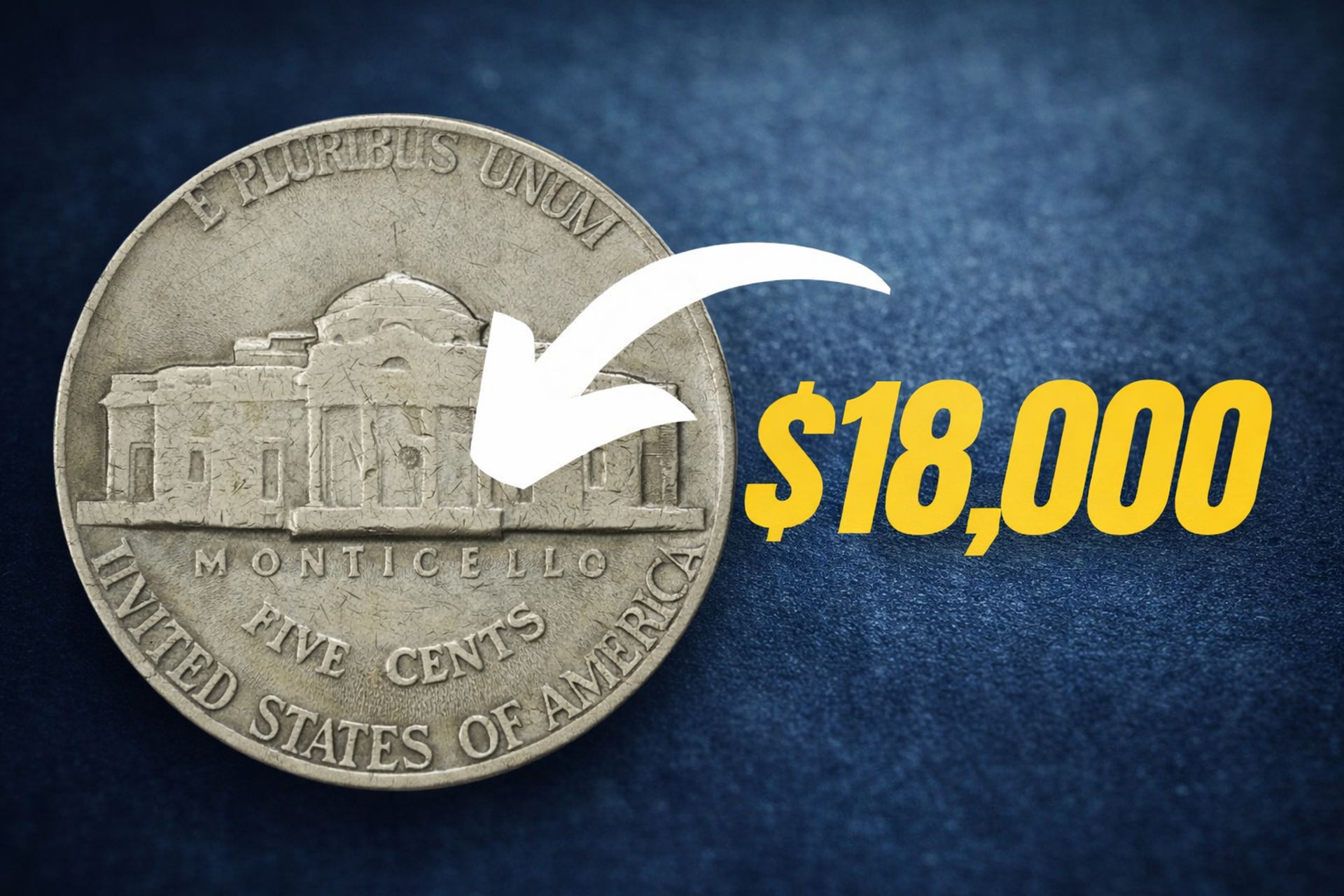
Despite more than 930 million coins minted, only a small percentage remain valuable today. The coin features Monticello (Thomas Jefferson’s Virginia home) on the reverse and Jefferson’s portrait on the obverse.
Key Fact: The 1976 nickel wasn’t a special commemorative design but was part of the regular Jefferson nickel series minted during the Bicentennial year.
Why Most 1976 Nickels Are Worth Only 5 Cents
The majority of 1976 nickels entered heavy circulation. Over time, wear, scratches, and damage drastically reduced their collector appeal. Coins in circulated condition are typically worth face value only.
When a coin shows visible wear on Jefferson’s hair, cheek, or the steps of Monticello, it has lost most of its collector value. These coins served their purpose as currency and bear the marks of decades of commercial use.
But value in coin collecting is not about quantity—it’s about quality. Even among circulated coins, those with less wear command slight premiums, but the real value lies in uncirculated examples.
Conditional Rarity Explained
Conditional rarity means a coin is valuable because few examples exist in exceptional condition, not because few were produced.
Even common coins can become rare if:
- They are uncirculated (never used in commerce)
- They show sharp design details with full mint luster
- They have minimal contact marks or discoloration
- They were preserved shortly after minting
This principle is exactly why some 1976 nickels are worth far more than expected. With over 930 million minted, they’re certainly not rare in absolute terms. But in gem uncirculated condition with Full Steps, they become conditionally rare.
The Importance of Coin Grading
Coin grading uses the Sheldon Scale, ranging from Poor (P-1) to Mint State (MS-70). Small differences in grade can cause massive price changes.
For example:
- A circulated coin may grade Fine (F-12) and be worth 5-10 cents
- A lightly circulated coin may grade About Uncirculated (AU-50) and be worth 25-50 cents
- A pristine coin may grade MS-65 or higher and be worth $5-$20
- A premium quality MS-66 or MS-67 with Full Steps can be worth hundreds
Professional Grading Matters
Coins certified by PCGS, NGC, or ANACS carry more market confidence and typically sell for higher prices than raw (uncertified) coins. For potentially valuable coins, professional authentication and grading is a worthwhile investment.
Higher grades mean fewer surviving examples—and higher market demand. Each incremental grade improvement (from MS-64 to MS-65, for example) can double or triple a coin’s value.
Full Steps (FS) — The Real Game Changer
The most valuable 1976 nickels carry the Full Steps (FS) designation. This means the steps on Monticello are fully visible and sharply struck, with all five or six steps showing complete separation.
Why this matters:
- Most nickels show weak or worn steps due to strike quality or circulation wear
- FS coins represent top-tier strike quality from the mint
- Only about 1–2% of 1976 nickels qualify for the FS designation
- The designation is only applied to coins grading MS-65 or higher
Some Full Steps examples have sold for hundreds of dollars, dramatically outperforming ordinary nickels. In exceptional cases, top-grade 1976 nickels with Full Steps have reached four-figure prices at auction.
Mint Marks and Value Differences
1976 nickels were produced at three U.S. Mints:
- Philadelphia (no mint mark) – 585,376,000 minted
- Denver (D mint mark) – 563,964,147 minted
- San Francisco (S mint mark) – 4,149,730 minted (proof coins only)
Each mint used different equipment and striking standards, affecting sharpness and collectible value. Generally, Denver mint coins are slightly more common in higher grades, while Philadelphia coins sometimes show slightly better strikes.
The San Francisco proof coins were specially made for collectors and have mirror-like surfaces. While not intended for circulation, some proof coins have entered the market and can be valuable if preserved in their original condition.
How to Check If Your 1976 Nickel Is Valuable
To evaluate your coin properly, follow these steps:
- Use magnification to inspect Monticello’s steps – look for complete, sharply defined steps
- Look for minimal wear – check Jefferson’s cheek and hair for smoothing or loss of detail
- Check for strong luster – original mint luster should flow across the surface without interruption
- Identify the mint mark – located on the reverse to the right of Monticello
- Compare with recent auction sales – check Heritage Auctions, eBay sold listings, or PCGS CoinFacts for comparable coins
- Consider professional grading for top candidates – especially if you suspect MS-65 or higher with Full Steps
Pro Tip: Handle coins by the edges to avoid leaving fingerprints on the surfaces. Store valuable coins in protective holders to prevent damage.
Final Thoughts
The 1976 Bicentennial nickel shows that hidden value often lies in small details. While most examples remain worth only five cents, a select few with exceptional quality can bring surprising returns.
The difference between a common circulated nickel and a valuable collector coin comes down to preservation, strike quality, and condition. Full Steps designation combined with high mint state grades creates the “perfect storm” for value in what is otherwise a common coin.
If you find a 1976 nickel in your change or collection, take a closer look—you might be holding a coin worth far more than its face value. In the world of coin collecting, it’s not just what you have, but what condition it’s in that determines its worth.